
Learning how to make paneer at home takes one litre of milk, a little lemon juice and about an hour. The block you get is softer and milkier than most packets in the shop. You also choose exactly what goes into it, which matters when you cook for children or count protein. This guide gives exact measurements, timings and fixes for common mistakes. You will also find protein, fat and calories per 100 g, a regular versus A2 milk comparison, and quick recipes for dinner.
The short version
- Boil 1 litre (1000 ml) of full-fat milk for 8 to 10 minutes.
- Add 2 to 3 tablespoons (30 to 45 ml) of lemon juice mixed with 2 tablespoons of water.
- Strain, rinse, press for 30 to 45 minutes, then chill in cold water for 10 minutes.
- Expect about 150 to 250 g of paneer, with roughly 18 to 19 g of protein per 100 g.
What you need before you start
Most of this is already in your kitchen. A heavy-bottomed pan matters more than anything else, because thin pans scorch milk at the bottom and leave a burnt taste in the paneer.
| Item | Measurement | Why it matters |
|---|---|---|
| Full-fat milk (buffalo or cow) | 1 litre (1000 ml) | More fat gives softer paneer and a better yield. |
| Lemon juice | 2 to 3 tablespoons (30 to 45 ml) | Splits the milk into curds and whey. |
| Water | 2 tablespoons (30 ml) | Dilutes the lemon so the milk splits gently. |
| Muslin or thin cotton cloth | About 30 cm square | Holds the curds while the whey drains. |
| Heavy-bottomed pan | 2 to 3 litre size | Stops the milk from sticking and burning. |
| Flat plate and weight | 1 to 2 kg (a full water jar works) | Presses the curds into a firm block. |
White vinegar works in place of lemon. Use about 2 tablespoons for the same litre of milk. Lemon gives a cleaner taste, so most home cooks prefer it.
How to make paneer at home, step by step
Keep a clock nearby. The timings below are what worked for a standard home stove on medium heat.
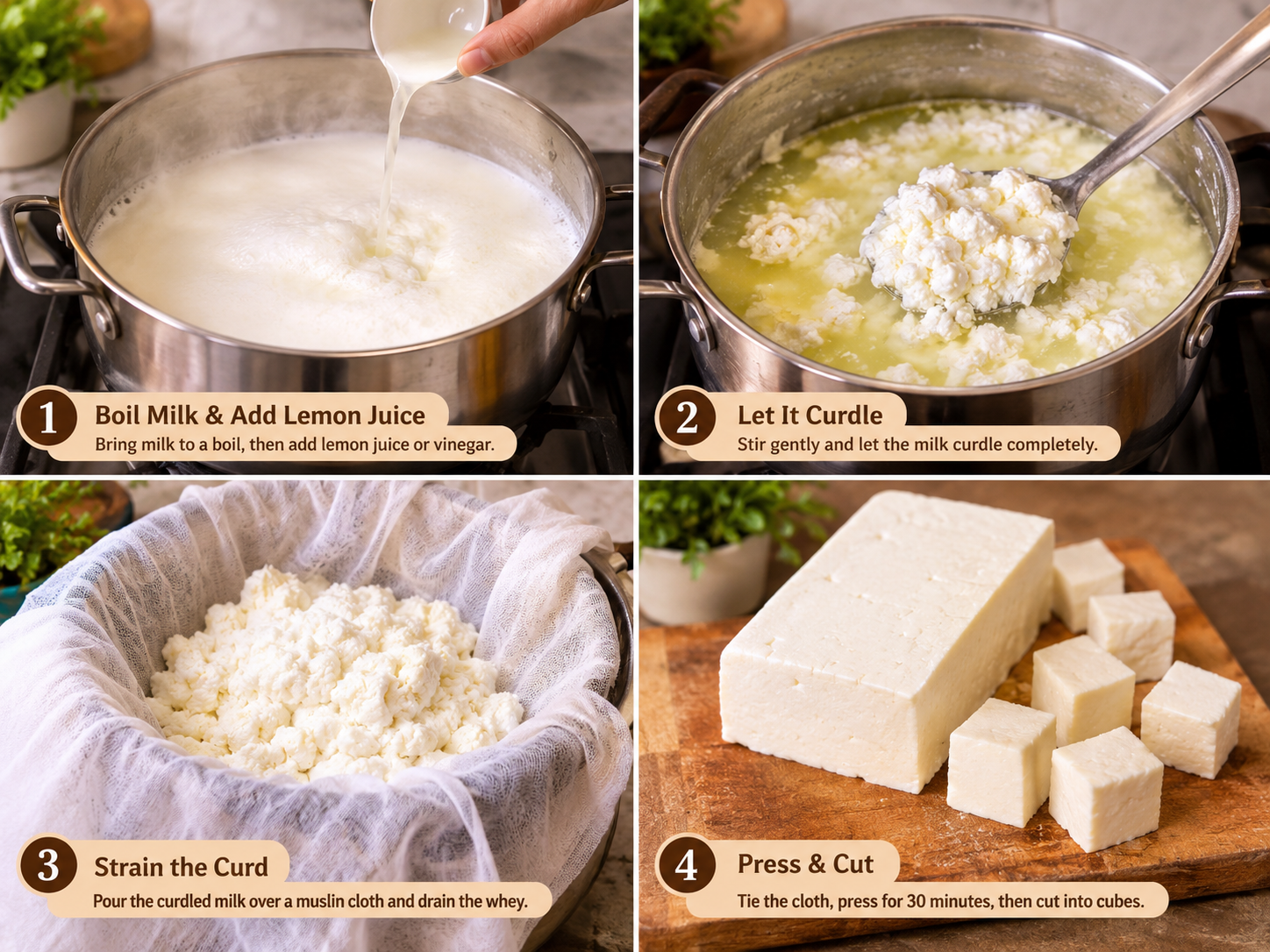
- Boil the milk. Pour 1 litre of full-fat milk into the heavy pan and heat it on medium. Stir every minute so no skin forms at the bottom. 8 to 10 minutes
- Mix the lemon. While the milk heats, stir 2 tablespoons of lemon juice into 2 tablespoons of water in a small cup. Keep 1 more tablespoon of juice aside in case the milk needs it. 1 minute
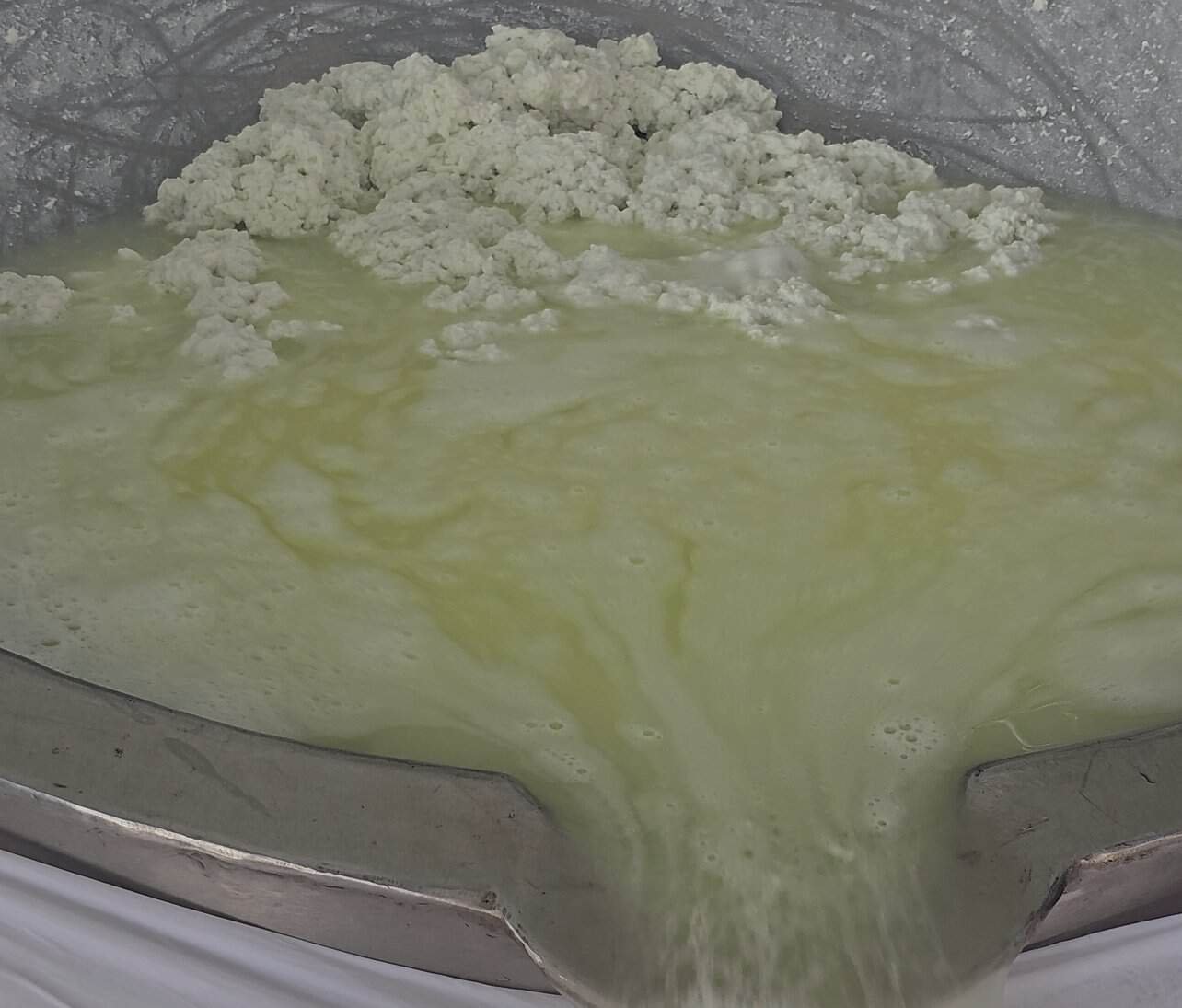
- Split the milk. Once the milk is boiling, turn the heat to low. Pour in the lemon mixture one tablespoon at a time while stirring gently. White curds will clump and the whey turns pale green and clear. 30 to 60 seconds
- Rest it. Switch off the heat and leave the pan alone. The curds settle and firm up a little. 3 minutes
- Strain and rinse. Set a colander over a bowl and line it with the cloth. Pour in the curds, then rinse them under cool running water to wash away the lemon taste. 5 minutes
- Squeeze gently. Gather the corners and twist the cloth to press out extra whey. For crumbled paneer, such as bhurji, you can stop here after 10 more minutes of hanging. 10 minutes
- Press into a block. Flatten the bundle into a square on a plate. Place a second plate on top with a 1 to 2 kg weight. Soft paneer needs about 30 minutes, firm paneer for tikka needs closer to 45. 30 to 45 minutes
- Chill and cut. Unwrap the block, drop it into a bowl of cold water for 10 minutes, then cut it into cubes. 10 minutes
Do not throw away the whey. It still holds some protein and minerals. Use it to knead chapati dough, cook dal or boil rice, and the food comes out slightly softer.
Tips for soft, fresh paneer every time
- Pick full-fat milk. Toned or low-fat milk gives a smaller and drier block. If you want a richer result, try fresh A2 buffalo milk delivered at home, which is naturally creamy.
- Use fresh milk. Boil fresh or pasteurised milk. Long-life packet milk often splits poorly and gives tiny, weak curds.
- Add the acid slowly. A rush of lemon splits the milk unevenly and makes tough paneer. Go one tablespoon at a time.
- Stop when the whey is clear. If the liquid still looks milky, add half a tablespoon more lemon. If it is clear, stop adding.
- Never skip the rinse. Without it the paneer tastes sour, and the sourness shows up in every curry you cook with it.
- Press by the dish. Press 30 minutes for palak paneer and curries. Press 45 minutes if you plan to grill or skewer cubes.
- Store it in water. Keep the block in a covered box of clean water in the fridge. Change the water every day and use the paneer within two to three days.
- Cook it the same day for the softest bite. Fresh paneer is at its best in the first few hours.
What to do when your paneer goes wrong
Almost every first attempt has one of these problems. All of them are easy to fix on the next try.
| What you see | Likely reason | Fix for next time |
|---|---|---|
| Hard and rubbery | Cooked too long after splitting, or pressed too long | Switch off the heat once the whey is clear. Press for 30 minutes. |
| Crumbles when cut | Too much acid, low-fat milk, or too little pressing | Use full-fat milk and press a little longer. |
| Sour taste | Lemon was not rinsed out | Rinse under cool water for 30 to 40 seconds. |
| Very little paneer, milky whey | Not enough acid | Add half a tablespoon of lemon and wait one minute. |
| Bitter taste | Too much vinegar or lemon | Measure the acid and add it in small amounts. |
How much paneer will one litre of milk give you?
This is the first thing most people ask. The answer changes with the fat in your milk and how hard you squeeze the cloth. Use the table as a rough guide, then weigh your first block on a kitchen scale and write the number down.
| Milk | Lemon juice | Paneer you can expect |
|---|---|---|
| 500 ml | 1 to 1.5 tablespoons | About 75 to 125 g |
| 1 litre | 2 to 3 tablespoons | About 150 to 250 g |
| 2 litres | 4 to 5 tablespoons | About 300 to 500 g |
Richer milk gives a bigger block, so buffalo milk usually lands at the top of that range. Whole buffalo milk holds about 3.7 g of protein per 100 g, while whole cow milk holds about 3.3 g. That works out to roughly 13 percent more protein sitting in your pan before the lemon even goes in.
A real kitchen example. Say a family of four takes 1 litre of milk every morning. If they save the extra half litre from the evening tea for two days, that is 1.5 litres on the third day. A single batch then gives about 225 to 375 g of paneer. That is enough for a matar paneer dinner with some left for tomorrow’s paratha.
How much protein, fat and calories are in 100 g of paneer?
Think of paneer as milk with most of the water squeezed out. What stays behind is protein, fat, calcium and a little moisture. The figures below describe full-fat paneer. Published numbers vary from one source to the next, since milk quality, brand and pressing time all nudge the result. So I show a realistic range wherever the sources do not agree.
| Nutrient | Typical figure | In plain words |
|---|---|---|
| Protein | Close to 19 g (national food tables put it near 18.9 g) | About one fifth of the block’s weight is protein. |
| Fat | Roughly 15 to 25 g, mostly saturated | The richer the milk, the higher this climbs. It is the reason paneer calls for portion sense. |
| Calories | Roughly 260 to 305 kcal | Dense energy, so even a modest serving counts for a lot. |
| Carbohydrate | Only a small amount | Far lower than what you get from rice, roti or dal. |
| Water | Around half the weight | A moist, soft block weighs more but carries less protein per gram. |
| Calcium | Roughly 200 to 480 mg | Supports bones and teeth. Brand and milk explain the wide gap. |
| Amino acids | All nine essential ones | So paneer counts as a complete protein. |
What a serving gives you
In most homes paneer plays a supporting role in a curry or a stuffing, so the size of the portion matters more than anything else. About 80 to 100 g is enough to anchor the protein in a meal. The table below shows how the numbers stack up.
| Portion | Protein (my arithmetic) | Calories (range) |
|---|---|---|
| 50 g (about 5 small cubes) | About 9 g | About 130 to 150 kcal |
| 80 g (a curry serving) | About 15 g | About 210 to 245 kcal |
| 100 g (half of a 200 g packet) | About 19 g | About 260 to 305 kcal |
| 150 g | About 28 g | About 390 to 460 kcal |
| 200 g (one full small packet) | About 38 g | About 520 to 610 kcal |
Here is a handy yardstick. A glass of cow milk (about 250 ml) carries roughly 8 g of protein. An 80 g helping of paneer carries close to 15 g, nearly double. For vegetarians who find it hard to hit their daily protein, that gap matters.
Regular milk paneer vs A2 milk paneer
A2 milk has become a common search, so here is an honest side by side. The main difference sits in one milk protein called beta-casein. Regular milk holds a mix of A1 and A2 types, while A2 milk holds only the A2 type.
| Point | Regular milk paneer | A2 milk paneer |
|---|---|---|
| Beta-casein type | Mix of A1 and A2 | A2 only |
| Protein per 100 g | About 18 to 19 g | About 18 to 19 g. No official table shows a gap, since protein follows the fat and pressing. |
| Fat per 100 g | Depends on milk fat, about 15 to 25 g for full-fat | Same rule. Fat depends on the milk, not on the A2 label. |
| Calcium and phosphorus | Good source | Good source, at a similar level |
| B vitamins | Has B12 and B2. B1 (thiamine) is present only in small amounts. | Same pattern. Some water-soluble B vitamins leave with the whey. |
| Lactose | Low, because the whey is drained away | Low, for the same reason |
| Digestion | Comfortable for most people | Some people who feel uneasy after milk say A2 sits better. Research is still limited, and A2 is not safe for a milk allergy. |
| Taste and yield | Depends on the milk fat | A2 buffalo milk is rich, so it can give a creamy block with a good yield. |
The takeaway is simple. The A2 label changes the type of one milk protein. It does not change the fat, protein or calcium numbers in the paneer. Want a creamy base for kadai paneer or shahi paneer? Pure A2 buffalo milk is a good place to start. Any fresh full-fat milk will also make a good block.
How to check if your paneer is real or fake at home
Some shops sell analogue paneer. It is a look-alike where milk fat is swapped for vegetable fat or starch is added. It should carry a label saying so, but not every seller does. These quick checks will not replace a lab test, but they catch the obvious cases.
- Feel it. Real paneer is soft and breaks into small, grainy crumbs when pressed. Fake paneer often feels rubbery or chewy.
- Smell and taste it. Fresh paneer smells milky and tastes slightly sweet. An oily smell, a sour smell or any slime means skip it.
- Try the iodine test for starch. Boil a small piece in a little water and let it cool. Add two drops of iodine tincture. A blue or black colour suggests starch has been added.
- Watch it cook. Real paneer holds its shape in a hot pan and browns gently. Poor quality blocks can turn rubbery or break apart.
- Read the pack. Check the ingredient list, the date and the seller’s licence number. The ingredients should read milk and an acid, nothing more.
Five easy paneer recipes to cook with your homemade block
Each recipe below uses about 200 g of paneer and serves two. These are short briefs to get you started, so adjust the spice to your family’s taste.
Kadai paneer
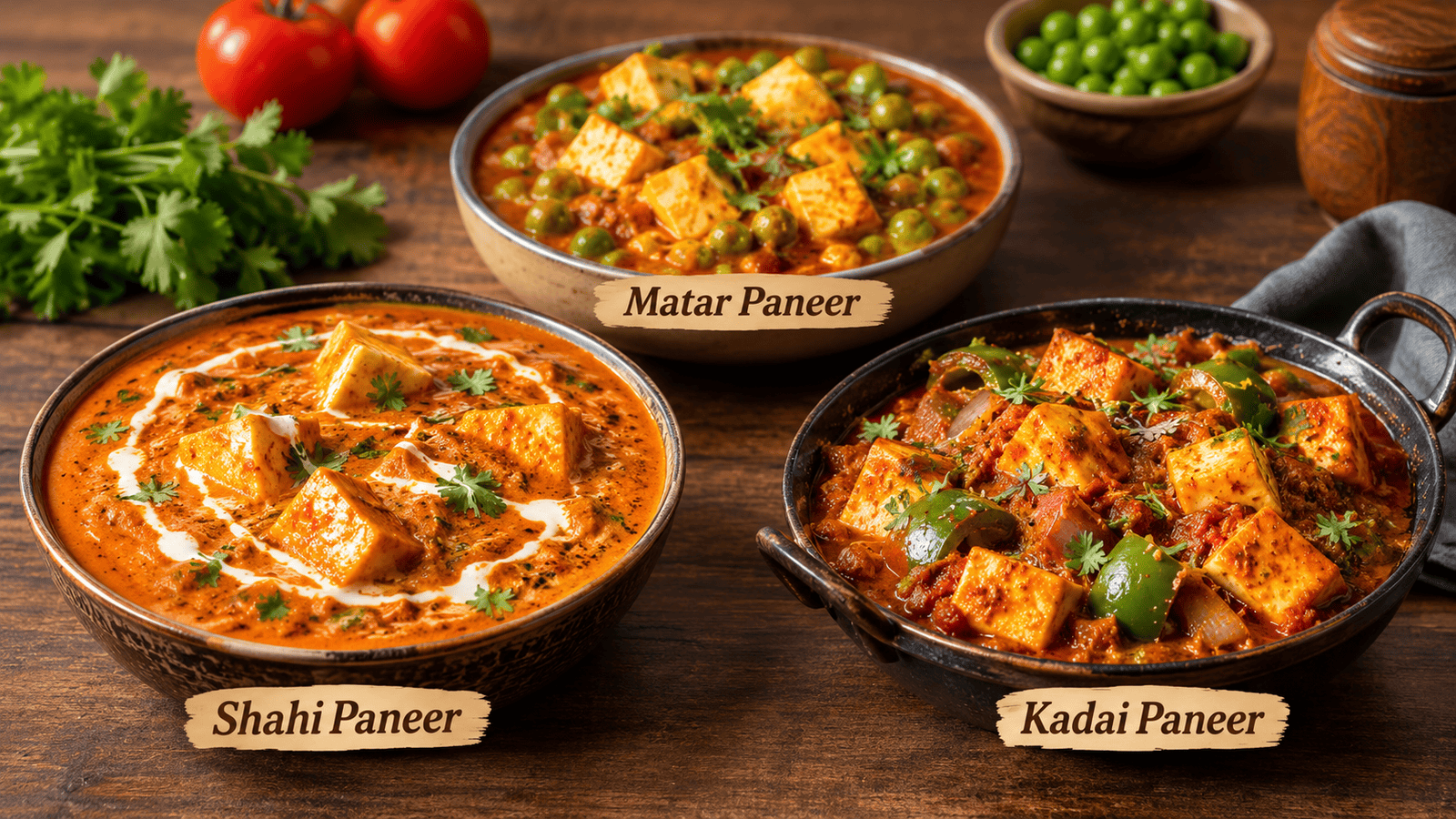
Dry-roast 1 teaspoon of coriander seeds with 2 dry red chillies, then crush them coarsely. Fry 1 sliced onion, 1 sliced capsicum and 3 chopped tomatoes with 1 teaspoon of ginger-garlic paste. Add the crushed masala, salt and the paneer cubes, then cook for 5 minutes. Finish with fresh coriander.
Shahi paneer
Boil 2 onions and 8 cashews, then blend them with 2 tomatoes into a smooth paste. Cook the paste in 1 tablespoon of ghee with a pinch of cardamom for 8 minutes. Stir in 3 tablespoons of cream or thick milk, add the paneer and simmer for 5 minutes. The gravy should be pale and rich.
Paneer butter masala
Cook 4 chopped tomatoes with 6 cashews and 1 teaspoon of ginger paste until soft, then blend. Heat 1 tablespoon of butter, pour in the blended gravy and add chilli powder and salt. Crush 1 teaspoon of kasuri methi into the pan, add the paneer and a splash of cream, and simmer for 5 minutes.
Paneer tikka
Mix half a cup of thick curd with 1 tablespoon of ginger-garlic paste and 1 teaspoon of chilli powder. Add half a teaspoon of turmeric, 1 teaspoon of garam masala, 1 tablespoon of besan and salt. Coat the cubes and rest them for 30 minutes. Thread them with capsicum and onion, then cook on a hot tawa or in an oven at 200 degrees for about 12 minutes.
Matar paneer
Fry 1 teaspoon of cumin, 1 chopped onion and 2 chopped tomatoes with turmeric, chilli and coriander powder until the oil leaves the sides. Add 1 cup of green peas and half a cup of water, then cook for 6 minutes. Slide in the paneer and cook for 3 more minutes. Serve with roti.
What are the easiest paneer recipes for a quick meal?
On busy evenings, these need almost no planning. Each one uses crumbled or cubed paneer straight from the fridge.
- Paneer bhurji (10 minutes). Crumble 150 g of paneer into a pan with a chopped onion, tomato, turmeric and salt. Stir for 5 minutes and eat it with roti or bread.
- Paneer paratha (15 minutes). Mix 80 g of grated paneer with chopped coriander, green chilli and salt. Stuff it into atta dough and cook with a little ghee.
- Tawa paneer tikka (12 minutes). Toss cubes in curd, chilli powder and chaat masala. Sear on a hot tawa until golden on both sides.
- Paneer stir fry (10 minutes). Sauté capsicum, carrot and beans, then add paneer cubes, soy sauce and pepper for 3 minutes.
- Paneer sandwich (8 minutes). Spread crumbled paneer mixed with pepper and mint chutney between toasted slices.
What doctors say about paneer for adults and children
I have kept this section to what qualified doctors have said in their own words elsewhere, so you are not relying on me alone. Each box below names the doctor and where the information comes from. The points are rewritten in my own words.
Case study 1, paneer in a heart-conscious adult’s diet
Dr. Amonkar, who runs the HG Cardiowise health channel, looks at paneer from the point of view of heart health. The video lists protein, calcium and healthy fats as paneer’s main strengths. He explains that paneer fits comfortably into an adult diet. The key is sensible portions and light cooking, such as grilled paneer instead of deep-fried snacks.
Everyday picture: Grilled paneer cubes with cucumber and tomatoes at lunch give protein and calcium. You skip the heavy oil of a fried starter.
Case study 2, paneer for vegetarians who need protein
Dr. Umesh Wadhavani speaks to vegetarians who struggle to reach their daily protein. He explains that paneer is a complete protein and a good source of calcium. He also points out that low-fat paneer is available for people who want to cut some fat. Many scary claims about paneer online, he says, are exaggerated.
Everyday picture: A vegetarian office worker adds 80 g of paneer to lunch and a dal at dinner. Together, these fill most of the gap that rice and roti leave.
Case study 3, paneer for growing children
Dr. Smita Barode writes that paneer packs protein, fat, vitamins and minerals into one food. She notes that its calcium may help protect small children’s teeth, and that this nutrient density may help children who are short on nutrition. Dr. Ezhilrasan adds that the protein, calcium and fats in paneer support bone growth. The fat also helps brain development and the body’s use of fat-soluble vitamins.
Everyday picture: A soft paneer paratha in the school tiffin gives a child protein, calcium and energy in a form that is easy to chew.
How paneer helps adults and children through an ordinary day
Benefits only matter if they fit real days. Here is how paneer shows up in common routines. Amounts are examples, not prescriptions.
For adults
The 9 to 6 worker. Paneer bhurji with two rotis for lunch gives about 15 g of protein from the paneer. Protein with the meal also helps you feel full for longer.
The gym-goer. A 100 g portion of grilled paneer after a workout adds about 19 g of protein, with calcium for the muscles and bones.
The vegetarian homemaker. Matar paneer once or twice a week fills the protein gap between dal days.
The person over 40. Calcium matters more with age. A small serving of paneer a few times a week adds to the daily calcium from milk and curd.
For children
The school tiffin. A paneer paratha or sandwich gives protein and calcium in a lunchbox that comes back empty.
The after-school hunger. A few soft paneer cubes with cucumber fill a hungry child before dinner without sugar.
The picky eater. Grated paneer hides well inside dosa, parathas and pasta, so vegetables and protein go in together.
The growing teenager. A paneer wrap after sports supports growth and recovery as part of a mixed diet.
Frequently asked questions about homemade paneer
How much paneer do you get from 1 litre of milk?
One litre of full-fat milk usually gives about 150 to 250 g of paneer. The exact weight depends on the fat in your milk, how much whey you squeeze out and how long you press it. Buffalo milk is richer, so it tends to give more. Weigh your first block and note the number for next time.
Why does homemade paneer turn hard or rubbery?
Hard paneer usually means the curds were cooked too long after the milk split, or pressed too hard for too long. Switch off the heat soon after the whey turns clear. Press for about 30 minutes first and check the texture. Full-fat milk also keeps the block softer.
How long does homemade paneer stay fresh in the fridge?
Homemade paneer stays good for about two to three days when kept in a covered box of clean water in the fridge. Change the water daily. Throw it away if you see slime, a sour smell or a colour change. Fresh paneer tastes best within the first day.
How much protein is in 100 g of paneer?
About 18 to 19 g of protein sits in every 100 g of full-fat paneer, which is close to one fifth of its weight. The exact figure moves a little with the milk, the brand and how firmly the block is pressed. For packet paneer, the label gives the exact number.
Is paneer a complete protein?
Yes. Paneer carries all nine essential amino acids, so it counts as a complete protein. This makes it useful for vegetarians who rely on dal, dairy and grains for protein. A portion of 80 to 100 g gives roughly 15 to 19 g of protein.
Is paneer good for weight loss?
Paneer can fit a weight-loss plan when portions are small, around 50 to 80 g, and it is not fried. Its protein helps you feel full. Full-fat paneer is calorie dense, so low-fat paneer is another option. Pair it with vegetables and keep the gravy light.
Can I make paneer at home without lemon or vinegar?
Yes. You can split hot milk with sour curd, using about one cup per litre of milk. Curd gives a slightly tangy and softer paneer. Add it slowly while stirring, and stop when the whey turns pale green and clear. Rinse the curds well before pressing.
Is buffalo milk good for making paneer?
Yes. Buffalo milk is thicker and richer than cow milk, so it gives a creamier block and more of it. Per 100 g, whole buffalo milk holds roughly 3.7 g of protein against about 3.3 g in cow milk. Full-fat milk of either kind gives the softest paneer.
How much paneer can I eat in a day?
For most healthy adults, one serving of 80 to 100 g a day fits into a balanced diet. That gives about 15 to 19 g of protein. Children need much smaller portions, so ask your paediatrician. If you have a heart, kidney or cholesterol condition, check with your doctor first.
How can I tell if paneer is real or fake?
Real paneer feels soft, smells milky and crumbles into small grains. Fake or analogue paneer often feels rubbery and may smell oily. For a simple check, boil a small piece, cool it and add two drops of iodine tincture. A blue-black colour suggests starch. These are home checks, not lab tests.
Is homemade paneer healthier than packet paneer?
The protein and calcium are similar, so the real difference is control. At home you choose the milk, the acid and the freshness. A packet offers convenience and a longer shelf life. For either one, the fat level and your portion size matter more than where it came from.