
What Is A2 Buffalo Milk? Meaning, Nutrition, Fat and Protein
A2 buffalo milk is milk that contains the A2 type of beta-casein, one of the proteins naturally found in milk. When people search for what is A2 buffalo milk, they are usually trying to understand how it differs from regular buffalo milk and whether it offers any nutritional advantage. The key point is that A2 describes a protein variant; it does not mean that the milk is automatically lower in fat, higher in calcium or suitable for everyone.
What Does A2 Buffalo Milk Mean?
Milk contains several proteins, including casein and whey. Beta-casein is one part of the casein group. Different genetic variants of beta-casein include A1 and A2. The A2 variant has proline at a particular position in its protein chain, while the A1 variant has histidine at that position. A2 buffalo milk therefore refers to buffalo milk in which the beta-casein is the A2 type.
This distinction is about the protein structure, not the colour, thickness or freshness of the milk. Two samples can look and taste similar while having different beta-casein profiles. A laboratory test or reliable animal-genetic verification is needed to substantiate an A2 claim. The Indian Council of Agricultural Research has discussed the prevalence of A2-type milk among indigenous cattle and buffalo populations, while also noting that strong evidence for many claimed disease effects of A1 milk is lacking.
What Is the Nutritional Value of A2 Buffalo Milk?
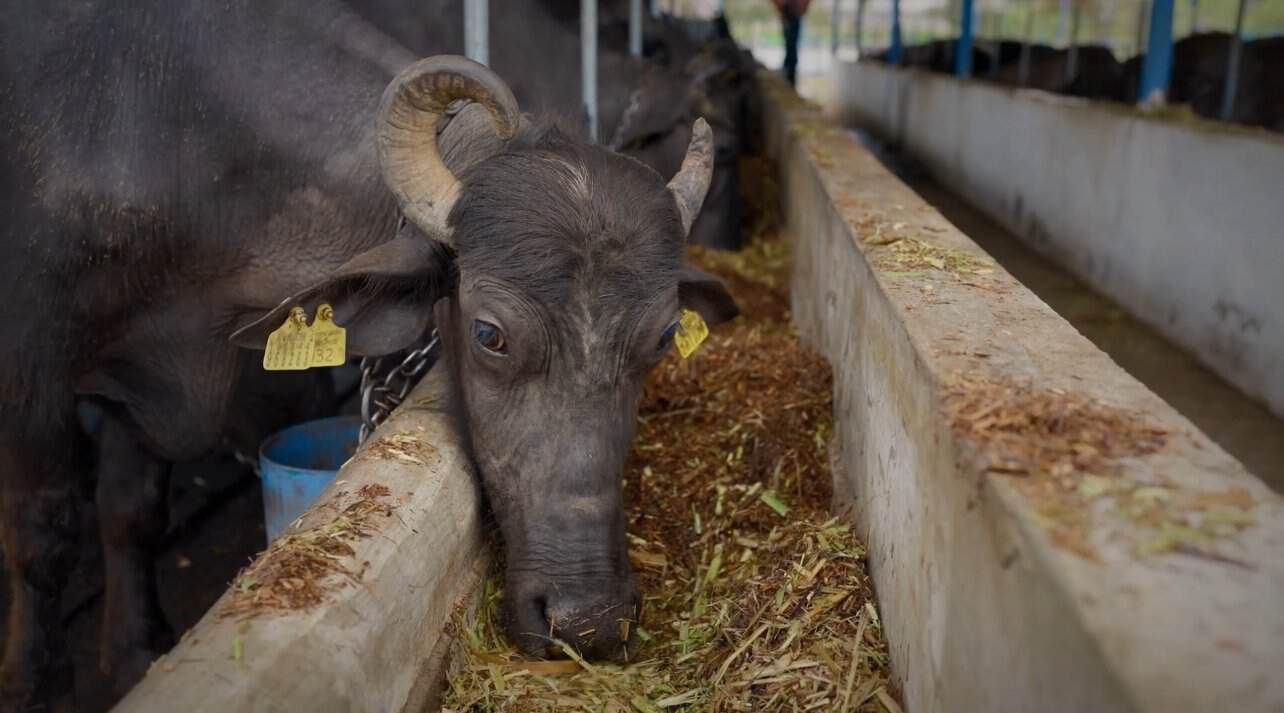
A2 buffalo milk has the general nutritional characteristics of buffalo milk. It provides high-quality protein, milk fat, lactose and minerals. Its exact composition varies with breed, individual animal, feed, season, stage of lactation and handling. A2 status alone does not determine the amount of fat, protein or calcium.
| Nutrient | Typical buffalo-milk profile | Why it matters |
|---|---|---|
| Fat | Often around 6–8 g per 100 ml; varies considerably | Provides energy and carries fat-soluble vitamins. |
| Protein | Often around 3.5–4.5 g per 100 ml | Supplies amino acids for growth and tissue maintenance. |
| Calcium | Commonly around 170–190 mg per 100 ml in composition references | Supports normal bones, teeth and muscle function. |
| Phosphorus | Present in meaningful amounts | Works with calcium in bone structure and energy metabolism. |
| Vitamin B12 | Present; amount varies | Supports normal nerve function and red blood cell formation. |
| Riboflavin (B2) | Present; amount varies | Helps the body use energy from food. |
These are indicative ranges, not a guaranteed nutrition label for every bottle. Ask the supplier for a batch-specific laboratory report if exact values matter to your diet.
How Much Fat and Protein Does A2 Buffalo Milk Contain?
Buffalo milk is generally richer in fat and total solids than cow milk. Many market samples fall around 6–8% fat and roughly 3.5–4.5% protein, but values can sit outside these ranges. For a practical example, a 200 ml serving containing 7 g fat and 4 g protein per 100 ml would provide about 14 g fat and 8 g protein. Always calculate from the actual milk test or label rather than assuming every buffalo milk has the same composition.
What Is the Difference Between Regular Buffalo Milk and A2 Buffalo Milk?
The phrase “regular buffalo milk” is not a precise scientific category. It may refer to milk sold without an A2 claim, or milk whose beta-casein profile has not been tested. The comparison below separates what can be said confidently from what should not be assumed.
| Feature | Buffalo milk without verified A2 claim | Verified A2 buffalo milk |
|---|---|---|
| Beta-casein | Profile may be untested or unspecified. | Verified to contain A2 beta-casein. |
| Fat | Depends on animal and handling. | Also depends on animal and handling; A2 does not set fat level. |
| Protein quantity | Depends on milk composition. | Not automatically higher; A2 describes a protein type. |
| Calcium and phosphorus | Naturally present in buffalo milk. | Generally similar when the base milk composition is similar. |
| Vitamin B1, B2 and B12 | Amounts vary by sample. | A2 status does not guarantee higher vitamin levels. |
| Digestive response | Individual response varies. | Some people report better tolerance, but evidence is limited and it is not lactose-free. |
| Proof of claim | May not include A2 verification. | Should be supported by genetic or milk-protein testing and traceability. |
What Are the Possible Benefits of A2 Buffalo Milk for Adults?
For adults who tolerate dairy, buffalo milk can be one way to add protein, energy, calcium and other nutrients to meals. A glass with breakfast can contribute protein to a meal; milk used in porridge or curd can add variety; and a serving after physical activity can contribute fluid and protein. These are benefits of milk’s overall nutrient profile, not proven special effects of the A2 variant.
Some small human studies and reviews have explored whether A2 milk may be better tolerated by certain people than milk containing A1 and A2 beta-casein. Findings are not strong enough to promise relief from bloating or other digestive symptoms. A2 milk still contains lactose and milk proteins. Anyone with a milk allergy must avoid it unless an allergy specialist advises otherwise; A2 milk is not a safe substitute for allergy management.
| Situation | How milk can help | Keep in mind |
|---|---|---|
| Adults who tolerate dairy | Can add protein, energy, calcium and other nutrients to meals. | These are benefits of milk’s overall nutrient profile, not proven special effects of the A2 variant. |
| A glass with breakfast | Can contribute protein to a meal. | Suits adults who tolerate dairy. |
| Milk in porridge or curd | Can add variety. | Suits adults who tolerate dairy. |
| A serving after physical activity | Can contribute fluid and protein. | Suits adults who tolerate dairy. |
| Digestive comfort | Some small studies explored whether A2 milk is better tolerated. | Findings are not strong enough to promise relief; A2 milk still contains lactose and milk proteins. |
| Milk allergy | Must be avoided unless an allergy specialist advises otherwise. | A2 milk is not a safe substitute for allergy management. |
Can Children Drink A2 Buffalo Milk?
For children over 12 months, pasteurised, age-appropriate animal milk may be included as part of a balanced diet when suitable for the child. Buffalo milk is energy-dense and contains protein and calcium, but its higher fat content and the child’s overall diet should be considered. It should not replace breast milk or infant formula during the first year of life. Parents should ask a paediatrician about the right type and quantity, particularly for toddlers with growth, allergy or digestive concerns.
In everyday life, milk served with breakfast may contribute calcium and protein; curd made from pasteurised milk can be part of lunch; and milk used in a home recipe can add nutrients. No child should be given A2 milk as a treatment for poor growth, autism, diabetes, allergies or digestive disease. There is not enough reliable clinical evidence to make those claims.
| Topic | What to know |
|---|---|
| Children over 12 months | Pasteurised, age-appropriate animal milk may be included as part of a balanced diet when suitable for the child. |
| First year of life | Should not replace breast milk or infant formula. |
| Milk with breakfast | May contribute calcium and protein. |
| Curd at lunch | Curd made from pasteurised milk can be part of lunch. |
| Home recipes | Milk used in a home recipe can add nutrients. |
| Things to consider | Buffalo milk’s higher fat content and the child’s overall diet. |
| Not a treatment | Not for poor growth, autism, diabetes, allergies or digestive disease; there is not enough reliable clinical evidence. |
| Who to ask | A paediatrician, particularly for toddlers with growth, allergy or digestive concerns. |
Which Buffalo Gives A2 Milk, and What Should the Buffalo Eat?
Indian river buffalo breeds such as Murrah, Jaffarabadi, Mehsana and Surti are commonly raised for dairy production. Breed name alone should not be treated as proof of the beta-casein profile of an individual animal or its milk. If a seller markets milk as A2, ask how the claim is verified, whether the herd is traceable and whether testing is available.
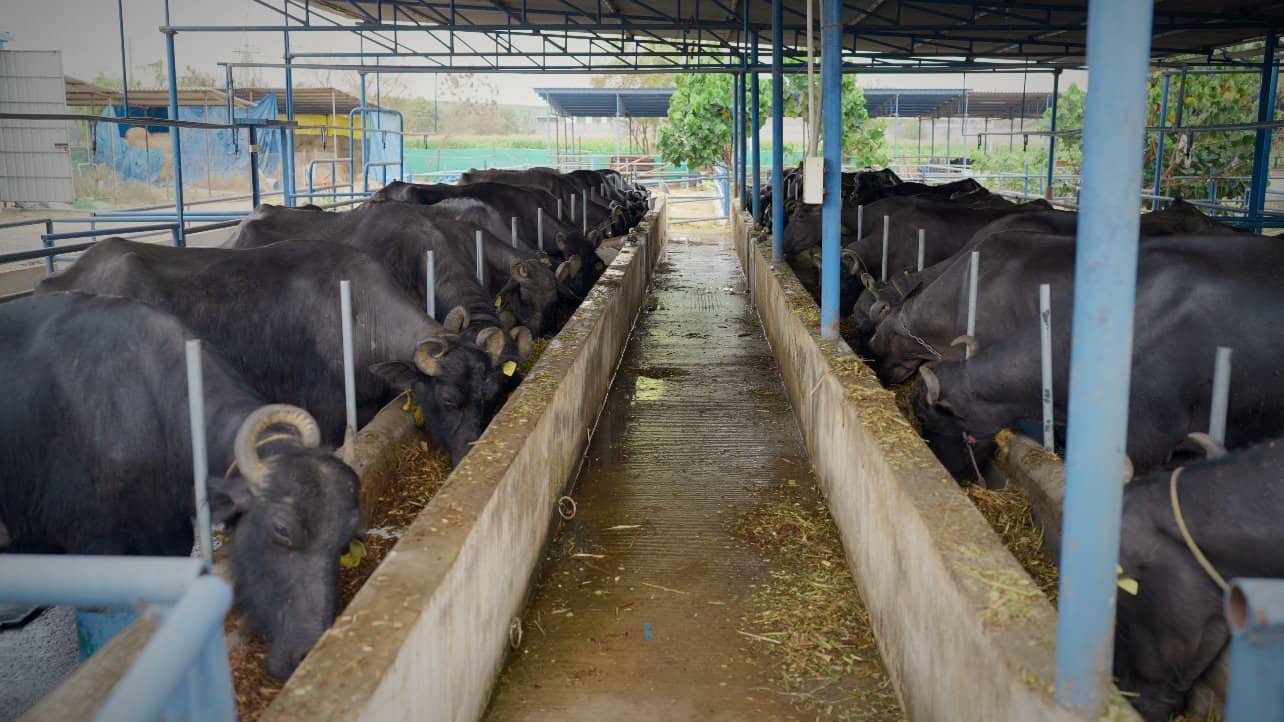
A balanced buffalo diet supports animal health and steady milk production. It usually includes good-quality green fodder, dry roughage such as hay or straw, a properly formulated concentrate mix, clean drinking water and mineral mixture as advised by a veterinarian or animal nutritionist. Feed quality and ration balance influence milk yield and composition, but feeding a particular grass, grain or supplement does not turn A1 milk into A2 milk. The A2 trait is genetic.
Is There Scientific Evidence or a Real-World Case Study?
It would be misleading to invent a named adult or child case study, or to attribute a health outcome to a YouTube doctor without a verifiable video and clinical details. Published reviews report that research into A1 and A2 milk is ongoing and that evidence for many claimed health benefits remains limited. A review published in 2024 discusses the proposed digestive differences while noting important evidence gaps. It also references the European Food Safety Authority’s conclusion that a direct relationship between BCM-7 and major non-communicable diseases had not been established.
For an evidence-based article, use a real, publicly accessible video only after checking the doctor’s full name, qualifications, exact statements, date and supporting references. A testimonial is not the same as a clinical case study, and a YouTube discussion should not be presented as proof that A2 milk treats a condition.
How Can You Choose Good-Quality A2 Buffalo Milk?
- Look for clear A2 verification and information about the testing method.
- Check the packing date, use-by date, storage instructions and intact seal.
- Choose pasteurised milk from a supplier that maintains a cold chain.
- Ask for a nutrition label or laboratory report for fat, protein and other declared values.
- Do not assume that “A2”, “natural” or “farm fresh” automatically means hygienic, unadulterated or nutritionally superior.
To explore available dairy products and milk information, visit the milk and dairy product website or browse the milk range and product information.
Frequently Asked Questions About A2 Buffalo Milk
1. What is A2 buffalo milk?
A2 buffalo milk is milk that contains the A2 variant of beta-casein, a protein naturally present in milk. A2 refers to the protein type, not the fat percentage or freshness. A credible A2 claim should be supported by suitable testing or verified herd records.
2. Is all buffalo milk A2?
Buffalo milk is commonly described in scientific and agricultural literature as predominantly A2-type, particularly in indigenous populations. However, consumers should not assume every animal or commercial batch has been individually verified. Ask the dairy supplier for traceability and evidence supporting its A2 label.
3. Is A2 buffalo milk better than normal buffalo milk?
It is different in its beta-casein profile when the A2 claim is verified. It is not automatically higher in fat, protein, calcium or vitamins. Overall quality also depends on hygiene, animal health, feed, handling, pasteurisation and storage. Choose based on verified information and your dietary needs.
4. How much fat is present in A2 buffalo milk?
Buffalo milk often contains around 6–8% fat, although the actual amount varies by animal, breed, feed and lactation stage. A2 status does not determine fat content. Check the supplier’s nutrition label or batch-specific laboratory report for the most accurate value.
5. How much protein does A2 buffalo milk contain?
Buffalo milk commonly contains approximately 3.5–4.5 grams of protein per 100 ml, though the exact amount varies. The A2 label describes the beta-casein variant rather than a higher protein quantity. Use the nutrition information provided for the specific milk you purchase.
6. Is A2 buffalo milk good for children?
Pasteurised buffalo milk may be included in the diet of children over 12 months when appropriate, but its quantity and fat content should suit the child’s needs. It must not replace breast milk or infant formula in the first year. Ask a paediatrician about individual concerns.
7. Is A2 buffalo milk suitable for people with lactose intolerance?
No A2 milk is lactose-free by default. Lactose intolerance relates to difficulty digesting lactose, the natural milk sugar, while A2 refers to beta-casein protein. Some people report differences in tolerance, but A2 milk is not a guaranteed solution. Discuss persistent symptoms with a healthcare professional.
8. Does A2 buffalo milk contain calcium and vitamin B12?
Buffalo milk naturally provides calcium and vitamin B12, along with protein, phosphorus and other nutrients. The amount can vary between samples and processing methods. A2 status does not guarantee extra calcium or B12, so refer to the nutrition label or laboratory analysis.
9. Which buffalo breed produces A2 milk?
Indian dairy breeds include Murrah, Jaffarabadi, Mehsana and Surti. Breed identification alone is not sufficient proof of an individual animal’s beta-casein profile. For a verified A2 claim, ask whether the animal or herd has been genetically assessed and whether milk testing is available.
10. Does buffalo feed change A1 milk into A2 milk?
No. The A1 or A2 beta-casein type is determined by genetics, not by feeding. Good-quality green fodder, dry roughage, balanced concentrate, mineral supplementation and clean water support animal health and milk production, but they cannot change the animal’s inherited beta-casein type.
Conclusion: Is A2 Buffalo Milk Worth Considering?
A2 buffalo milk means buffalo milk with the A2 beta-casein protein variant. It offers the familiar nutritional features of buffalo milk, including protein, fat, calcium and phosphorus. The most important buying considerations are verified A2 status, hygienic milking, pasteurisation, cold storage and accurate nutrition information. It may suit adults and children over 12 months as part of a balanced diet when dairy is appropriate, but it is not lactose-free and should not be promoted as a treatment for medical conditions. Make your choice using evidence, product testing and advice from a qualified healthcare professional when needed.